Termite Treatment in Atlanta, GA
Termite treatment in Atlanta means subterranean termites: colonies in the soil that reach wood through mud tubes. The treatment choices are well established. What deserves your attention is the contract that comes with it.
If termites are swarming in the house right now
It looks alarming and it is not an emergency. Swarmers do not eat wood and they die within hours indoors. The damage behind them happens over months and years, so you have time to get a proper inspection rather than whoever can come today.
- Collect a few swarmers in a sealed bag or on clear tape. Wings are fine too; they identify the insect.
- Vacuum up the rest. Do not spray them with a store-bought insecticide, which kills nothing that matters.
- Note where they came from: a window, a bath trap, a crack in the slab, a door frame.
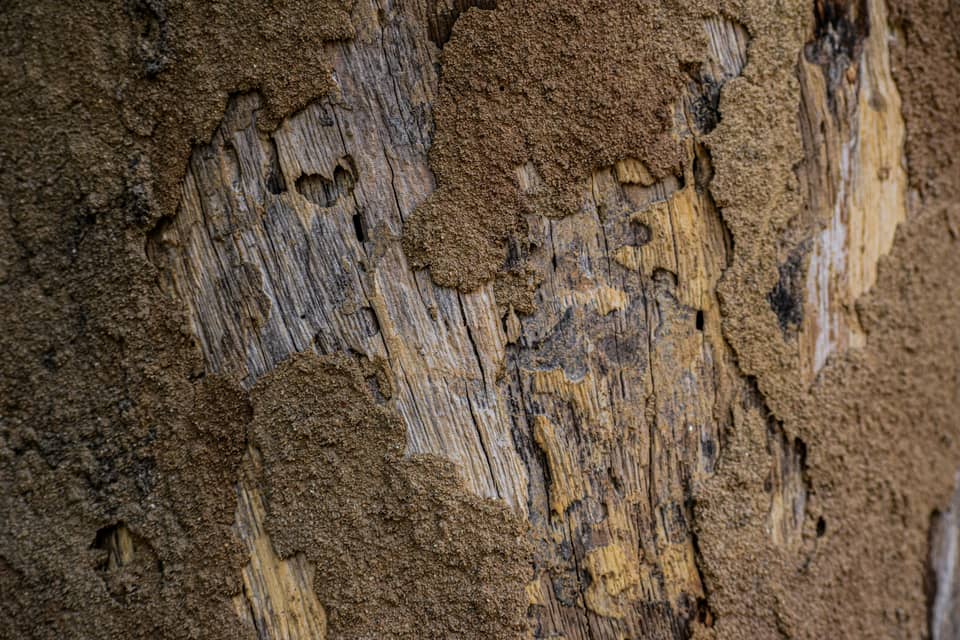
- Leave any mud tubes you find in place so the inspector can see them.
- Then call and book an inspection. A swarm is the best evidence there is.
Atlanta has native subterranean termites, and occasionally Formosans
The termites in almost every Atlanta case are native Reticulitermes subterranean termites. Their swarmers are black, about three-eighths of an inch long, and fly during the day, usually between February and April on a warm day after rain. The Formosan subterranean termite, the aggressive invasive species, has been found in Georgia, and UGA has tracked a small number of confirmed colonies, most of them in metro Atlanta. It remains rare here. Formosan swarmers are caramel-coloured, about half an inch long, fly at night in late May and June and gather at lights. If that is what you saw, say so. Drywood termites, the ones tented houses in Florida are fumigated for, are not the usual Atlanta problem.
The two main ways termites are treated
Liquid soil treatment
A termiticide is put into the soil all the way round the foundation, by trenching along the outside and rodding it in, and by drilling through slabs, porches, patios and garage floors where they meet the house. In a crawlspace the treatment also goes along the inside of the foundation walls and around each pier. Most modern products are non-repellent: termites cannot detect them, pass through the treated soil and carry it back to the colony. Done completely, a liquid treatment protects for years. Done partly, it leaves a gap.
Bait stations
Stations are set into the soil around the house at intervals and checked on a schedule. When termites find one, the bait inside is taken back to the colony and slows or stops it. Baits mean less drilling and less product in the soil, which suits houses with wells, ponds or awkward slabs. They depend entirely on the stations being monitored, and Georgia requires a bait contract to carry a boxed warning that removing the system may leave the house without protection.
Wood treatment
Borate products sprayed on bare wood, in a crawlspace or attic, are sometimes added to either approach. They are a supplement, not a replacement for treating the soil.
What Georgia requires the contract to say
This is the part to read slowly. Georgia's Structural Pest Control rules require a written contract for every termite job, and that contract has to include: the control method; the start date and contract period; a diagram of the house showing any active or old infestation; the price, including any repair estimate; whether there is a guarantee and what it covers; whether the company carries an approved bond; and the renewal terms, including the renewal fee, how many years it is fixed, and how often reinspections happen. You sign before any work starts, and you have a three-day right to cancel.
The boxed statement
If there is a guarantee, the first page must open with one of two statements in a heavy black box. One says the contract provides for retreatment but not repair of damage. The other says it provides for retreatment and repair of damage within the limits stated. The difference between those two sentences is the difference between a company that comes back and treats again, and a company that also pays for the joist the termites ate. Know which one you are buying.
When a house keeps getting reinfested
Georgia's rules also say a house under contract that has three or more separate areas of active subterranean termite infestation within five years must get a complete retreatment to the state's minimum standard. If that keeps happening to yours, ask about it directly.
Atlanta houses and where termites get in
On older intown houses the usual entry points are brick piers and foundation walls in a damp crawlspace, porch framing and steps sitting on or near soil, and later additions whose slabs were never treated with the original house. On newer slab houses it is the slab edge, the expansion joint where a garage or porch meets the house, and the gaps around plumbing coming up through the slab. Anywhere in the metro, mulch and soil built up over the foundation line give termites a hidden path past the inspection zone, and the clay keeps that soil damp. A company inspecting your house should talk about each of these by name.
Damage, repairs and who fixes them
A pest company treats termites. Replacing a damaged sill plate or a joist is carpentry, and most pest companies do not do it unless the contract covers repair, in which case the contract sets the limits. If an inspection finds damage, get a builder or structural inspector to look at it separately. Georgia's termite letter itself says it is not a structural report.
Call for a free termite inspection. A local company will check the crawlspace or slab, draw the diagram Georgia requires, and give you a written quote with the contract terms spelled out.
| Liquid soil treatment | Bait stations | |
|---|---|---|
| How it works | Treated zone in the soil round the whole foundation | Termites carry bait from stations back to the colony |
| Disruption | Trenching, plus drilling slabs and porches | Stations set in the soil; little drilling |
| Depends on | Complete coverage, with no gaps | Regular monitoring visits for as long as the contract runs |
| Suits | Most houses, especially crawlspace and pier foundations | Wells nearby, hard-to-drill slabs, owners who want less product |
Common questions
How much does termite treatment cost in Atlanta?
It depends on the size of the house, the length of foundation, the construction (crawlspace, slab, basement) and how much drilling is needed. A spot treatment can be a few hundred dollars; a full liquid or bait treatment on a large house runs into the thousands. Then there is an annual renewal. The cost guide goes through the drivers.
How long does a termite treatment last?
A properly applied liquid treatment protects for several years, but the contract is what keeps someone responsible for checking it. Bait systems only work while they are monitored. Renewal keeps the guarantee alive; if a bond lapses, many companies require a new inspection or retreatment to restart it.
Can I treat termites myself?
Georgia law lets property owners apply pesticides to their own property, but a full subterranean treatment needs trenching, rodding and drilling to a standard, and no store product comes with a contract or a termite letter. For a sale, the letter has to come from a certified operator anyway.
Do I need to leave the house?
Not for a standard subterranean termite treatment. That is fumigation, which is used for drywood termites and is not the usual approach in Atlanta. Expect some drilling noise and people working in the crawlspace or garage.
What is the difference between a retreatment bond and a repair bond?
A retreatment bond means the company will treat again if termites return. A repair bond adds payment for damage within stated limits. Georgia requires the contract to say which, in a boxed statement on the first page. Repair bonds cost more per year and their limits matter.
My house was pre-treated when it was built. Am I covered?
Only for the contract period on that pre-treatment, which the builder or the pest company should have given you. Many owners of new houses never renew it. Find the paperwork, or ask the company that did it, before assuming anything.
I just found mud tubes but no swarm. Is that enough to treat?
Mud tubes on a foundation, pier or wall are strong evidence of subterranean termites. Break a small section: if it is rebuilt within days, the termites are active. Leave the rest for the inspector to see.
Who do I complain to if a treatment does not work?
Start with the company under the contract. If that goes nowhere, the Georgia Department of Agriculture takes inspection requests about termite treatments and conflicting reports, by webform or phone.
Are you a termite company?
No. This is an advertising and referral service run by Pinecrest Advisory Services, LLC. Requests go to an independent local company licensed by the Georgia Department of Agriculture, which inspects, quotes, treats and writes the contract.
Other pest work in Atlanta
- Termite Inspections and Termite Letters in Atlanta
- Pest Control in Atlanta, GA
- Cockroach Control in Atlanta
- Mosquito and Flea Control in Atlanta
- Fire Ant Control for Atlanta Yards
Also serving
Termite Treatment is available beyond Atlanta, across Decatur , Sandy Springs , Brookhaven and Smyrna .
Ask about termite treatment
Say what you are seeing and where, and a local pest control company will follow up, usually within a few days for an inspection. Answered Mon–Sat, 8am–6pm · after hours we call back the next morning Or call (470) 665-4393 if it is a swarm in the house or a closing date this week.